

Views: 123 Author: Site Editor Publish Time: 2026-06-16 Origin: Site
Large‑scale aluminum fabrication has always been a technical challenge. Welding an 8‑meter diameter aluminum mold pushes filler metal and process parameters to their limits – hot cracking, porosity, weld strength, and consistency are the critical factors that determine success or failure.
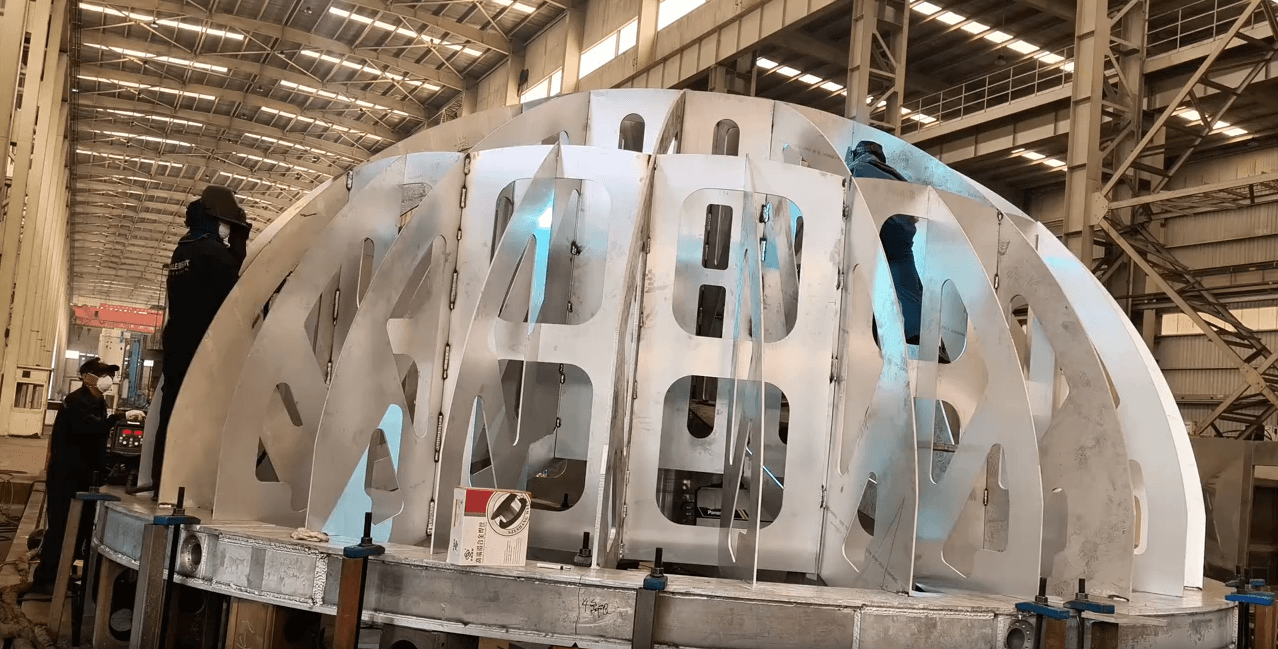
Real‑world validation: Szeshang ER5356 MIG aluminum welding wire has been successfully used to weld and deliver an 8‑meter diameter aluminum mold, with the following performance attributes:
High crack resistance – Al‑Mg alloy formulation (Mg 4.5‑5.5%) effectively suppresses hot cracking
Excellent feedability – precision drawing process ensures smooth MIG welding operation
Superior wetting and bead appearance – clean, consistent weld profiles
Broad applicability – suitable for EV battery housings, energy storage structural components, large‑scale aluminum formwork, and other high‑end manufacturing scenarios
ER5356 is an aluminum‑magnesium alloy filler wire containing approximately 5% magnesium with a small titanium addition for grain refinement. It offers good corrosion resistance, high resistance to hot cracking, high strength, and good forgeability, making it a fundamental consumable for TIG and MIG welding of aluminum‑magnesium alloys.
In 2026, the aluminum market is experiencing one of the most bullish cycles in half a century. J.P. Morgan projects aluminum prices will eventually reach USD 4,000 per tonne, with an average of USD 3,750 per tonne for the second half of 2026. Citibank has raised its H2 2026 price target to USD 4,000 per tonne, and under an optimistic scenario, the 2027 average could climb to USD 5,350 per tonne. The World Bank forecasts an average 2026 price of USD 3,200 per tonne, a 21.6% increase from 2025’s USD 2,632 per tonne.
What is driving such strength in aluminum prices? Three factors are converging:
First, a supply‑side black swan. In late February 2026, conflicts broke out in the Middle East, severely impacting the electrolytic aluminum industry across six countries that account for 9.2% of global capacity. As of May, the cumulative affected capacity exceeded 2 million tonnes per year, with Emirates Global Aluminium (EGA) in the UAE – 1.6 million tonnes of capacity – completely shut down. Global idle capacity is now near zero, and LME aluminum inventories have fallen to a 55‑year low.
Second, new supply falls far short of expectations. Global electrolytic aluminum capacity additions in 2026 are estimated at 2.8‑3.3 million tonnes, but actual incremental output is only 1.8‑2.4 million tonnes for the year. At the same time, rigid production cuts in Mozambique, Europe, and elsewhere total another 1.09 million tonnes. Citibank expects a global aluminum market deficit of approximately 2.7 million tonnes in 2026.
Third, structural demand growth is exploding. Global demand for aluminum in the new energy sector is on a long‑term upward trajectory. Aluminum content per electric vehicle now exceeds 200 kg, and global EV sales are projected to surpass 22.5 million units in 2026. Photovoltaic new installations are forecast to grow by 30%, and energy storage installations by 60%. Total global aluminum demand is expected to add 1.5‑2.0 million tonnes in 2026.
For welding consumables procurement, the signal is clear: the downside potential for aluminum prices is increasingly limited. Locking in high‑quality aluminum welding wire prices and supply now is the key to controlling costs and ensuring delivery.
The explosive growth of the global new energy industry is reshaping the market landscape for aluminum welding wire.
Electric vehicles are the single largest driver of incremental aluminum demand. The application of aluminum alloys in body structures, integrated die‑castings, battery packs, and chassis systems continues to increase. Battery tray welding imposes stringent requirements on filler wires – meeting IP67 waterproofing standards and tensile strength ≥200 MPa. ER5356 aluminum‑magnesium alloy wire, with its 4.5‑5.5% magnesium content, effectively improves weld crack resistance and corrosion resistance, making it the preferred choice for EV battery housing welding.
Energy storage and photovoltaics are also creating substantial incremental demand. In 2026, the energy storage sector is expected to generate around 570,000 tonnes of aluminum demand, while new PV installations will account for approximately 480,000 tonnes. Energy storage battery enclosures, heat sinks, and busbars extensively use aluminum alloys, demanding higher welding quality and consistency.
The aluminum‑for‑copper trend is accelerating. The current copper‑to‑aluminum price ratio has risen above 4.2, giving aluminum a clear economic advantage. High‑voltage wiring harnesses in EVs, air conditioning systems, and power cables are systematically adopting aluminum‑for‑copper technologies.
The global aluminum welding wire market is expanding in tandem. The market was valued at USD 11.41 billion in 2025 and is projected to reach USD 12.45 billion in 2026, with a CAGR of 10.83%, potentially exceeding USD 23.45 billion by 2032. The Chinese aluminum welding wire market is also growing steadily, with a projected CAGR of 4.6% from 2024 to 2030.
Demand is surging while supply tightens. Those who secure high‑quality welding wire supply first will gain a decisive advantage.
Szeshang builds its competitive edge on two core development pillars:
High‑End Smart Manufacturing
Precision alloy formulation to ensure compositional consistency of every batch of ER5356 wire
Stable drawing process for precise diameter tolerance and reliable feeding performance
Full‑traceability quality inspection system – raw material to finished product, every step is controlled
Low‑Carbon Circular Economy
Green smelting processes to reduce production‑stage carbon footprint
Recyclable packaging to minimize waste
Low‑carbon supply chain management to help customers pass carbon footprint audits
We do not merely supply welding consumables – we are committed to being your value partner in sustainable manufacturing.
As a specialized manufacturer in the aluminum welding consumables sector, Szeshang offers a complete product portfolio for B2B customers:
| Product Grade | Characteristics | Typical Applications |
|---|---|---|
| ER1070 | Pure aluminum, high electrical conductivity | Electrolytic aluminum busbars, conductor connections |
| ER1100 | Commercially pure aluminum, good corrosion resistance | Chemical equipment, food processing |
| ER4043 | Al‑Si system, excellent fluidity | Welding of cast aluminum alloys |
| ER4047 | Al‑Si system, higher silicon content | Thin‑sheet welding, brazing |
| ER5356 | Al‑Mg system, superior crack resistance | EV battery housings, large aluminum structures |
| ER5183 | Al‑Mg system, higher strength | Marine engineering, pressure vessels |
Stable bulk supply + specialized technical support for large‑diameter aluminum mold and thick‑plate welding + customizable wire diameter, packaging, and alloy composition – meeting the diverse needs of B2B clients.
Long‑term growth in aluminum demand from the global new energy sector, combined with slower‑than‑expected overseas primary aluminum capacity additions and ongoing Middle East supply disruptions, continues to strengthen the industry’s supply‑demand fundamentals. The aluminum industry is poised for a new cycle of prosperity.
For welding consumables procurement, this means:
Locking in high‑quality aluminum welding wire early = avoiding cost pressures from rising aluminum prices
Choosing a reliable strategic supplier = ensuring delivery stability and production continuity
Adopting low‑carbon circular supply chains = meeting increasingly stringent carbon footprint requirements
Szeshang has already built capacity and technical reserves. We invite B2B customers to:
✅ Request real‑world welding data from 8‑meter‑class aluminum mold projects
✅ Apply for sample testing of ER5356 MIG aluminum welding wire
✅ Discuss long‑term fixed‑price or framework cooperation agreements
In this aluminum price upcycle, secure your competitive edge with stable consumables and advanced processes.
you are welcome to contact us for inquiries, samples, pricing, and technical support.
Szeshang Welding Brand – Your Strategic Partner for Aluminum Welding Wire
