

Views: 28 Author: Site Editor Publish Time: 2026-05-25 Origin: Site
Learn when and how MIG wire (e.g. ER70S-6) can be used as TIG filler rod. Expert advice from SzeShang Welding Materials – professional welding wire manufacturer.
Can I use MIG wire for TIG welding?
Yes, but with important limitations.
In certain situations, MIG wire can be used as TIG filler metal. However, it is not recommended as a regular practice due to design differences between MIG wire and dedicated TIG rods.
The key lies in the wire classification.
Take ER70S-6 as an example:
“E” (Electrode) – For MIG welding (consumable electrode)
“R” (Rod) – For TIG welding (filler rod only, non-consumable electrode)
When a wire has the “ER” prefix, it means the chemistry meets both MIG and TIG requirements. Therefore, using an ER70S-6 MIG wire as TIG filler is chemically acceptable. This is the basis for the “possible to use” claim.
Although the chemistry is fine, MIG wires are designed differently. Using them for TIG can create several practical problems.
MIG wire comes wound on a spool and has a natural coil curvature. It is difficult to straighten completely. During TIG welding, feeding a curved, shaky wire into the weld pool is awkward and reduces precision.
MIG wire is much thinner and softer than a rigid TIG rod. Controlling the exact amount fed into the molten pool – especially for short, fast movements – becomes challenging.
MIG wires like ER70S-6 contain higher levels of deoxidizers (silicon, manganese). This makes the weld pool extremely fluid. While that sounds good, in structural applications it can alter stress distribution and lead to unexpected defects if not properly managed.
Despite the drawbacks, there are specific scenarios where MIG wire works well as a TIG filler:
Thin sheet welding (<1mm) – TIG rods are often too thick. The fine diameter of MIG wire allows better heat control and cleaner results.
Emergency repairs – When you have no TIG rods on hand but MIG wire is available.
Very small diameter needs – If the smallest TIG rod (e.g. 1.6mm) is still too large, MIG wire (0.8–1.2mm) is the only option.
Follow these steps to minimize problems and achieve acceptable results.
Straighten the wire
Pull it tightly between two pliers or gently tap it flat on a steel plate with a rubber mallet.
Improve handling
Twist 2–3 wires together for more rigidity, or attach a simple handle.
Clean thoroughly
Remove all oil, rust, and dirt from both base metal and filler wire.
Adjust welding parameters
Current: keep low – e.g. 30–50 Amps (adjust to material)
Shielding gas: 100% pure argon
Secure the workpiece
Clamp or tack weld firmly to avoid distortion.
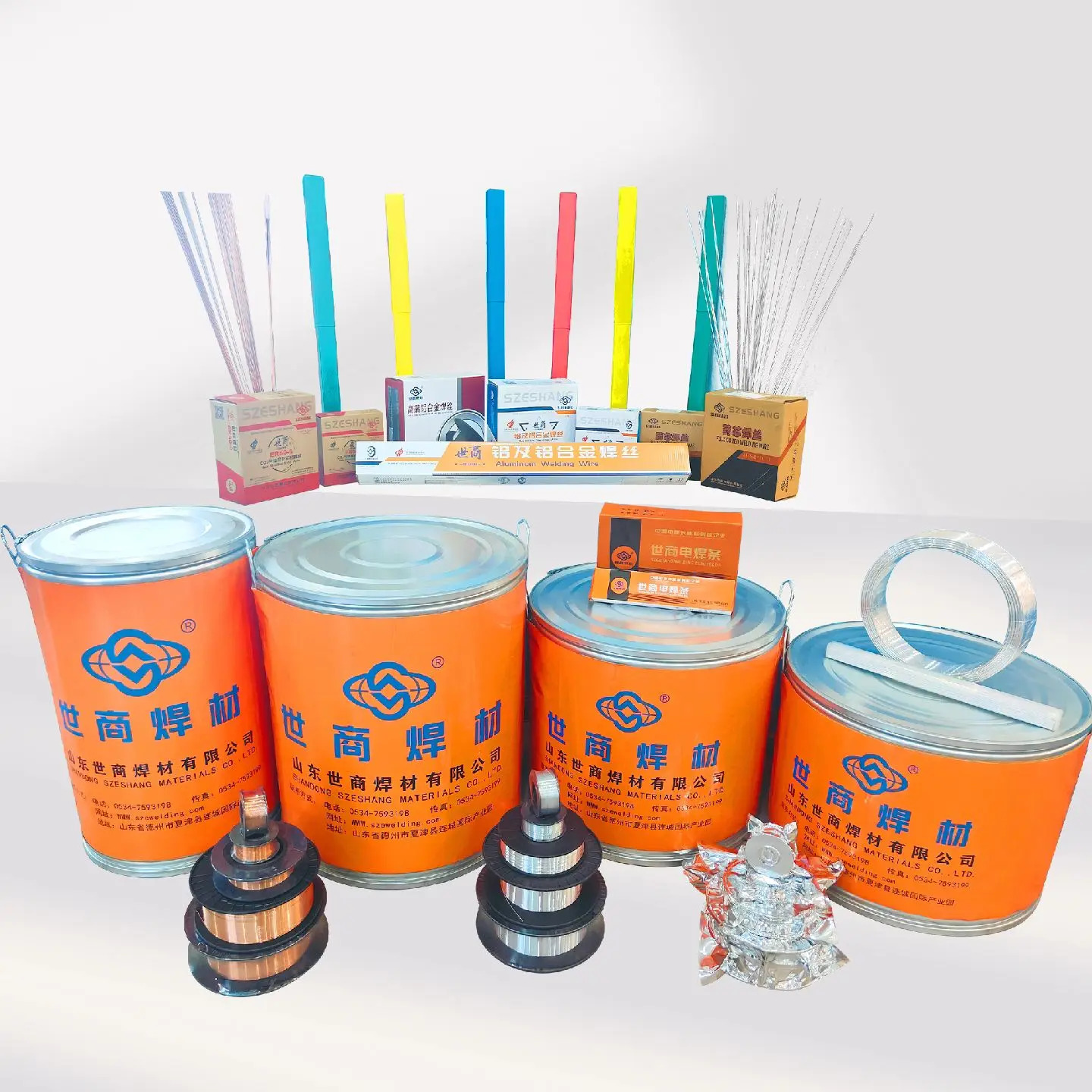
✅ Chemically suitable MIG wires (e.g. ER70S-6 from SzeShang welding) can be used as TIG filler in emergencies or for thin sheet welding.
❌ However, due to poor handling, difficult feed control, and excessive fluidity, they are not recommended for daily professional use.
For best quality and efficiency, always choose straight, dedicated TIG rods designed for the job.
At SzeShang Welding Materials, we manufacture high-quality welding wires for both MIG and TIG applications, including:
ER70S-6 Copper Free Welding Wire – Low spatter, low fumes, excellent arc stability
Custom diameters and packaging for robotic, automated, and manual welding
Strict quality control to meet AWS and ISO standards
Need expert advice? Contact us:
sales@szewelding.com
www.szewelding.com
#SzeShangWelding #MIGwire #TIGwelding #ER70S6 #CopperFreeWire #WeldingTips #WeldingConsumables #TechnicalGuide
